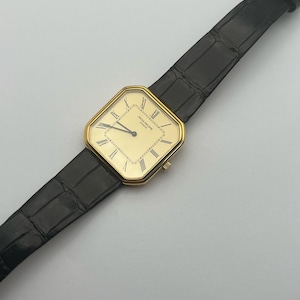
1930s Art Deco Gruen Caliber 117, 17J, Restored
$878.00
-
DetailsWelcome to my shop. My heart has always been captured by the Gruen Quadron, perhaps its my admiration for Gruen taking such an enormous risk on introducing architecturally a new model within the fledging wrist watch market. I admire their grit for taking a chance, for looking beyond what was comfortable, no risk, no reward.
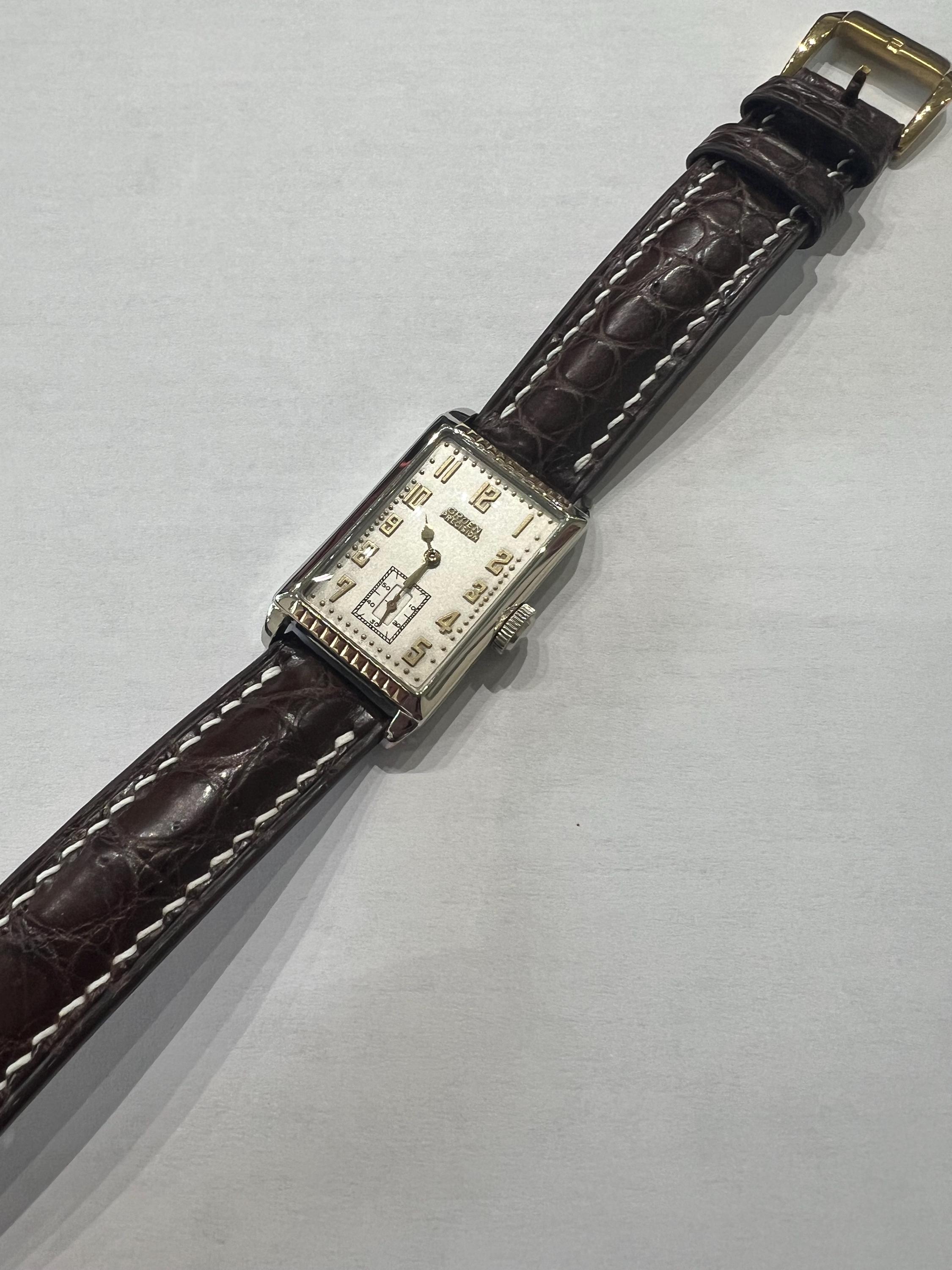
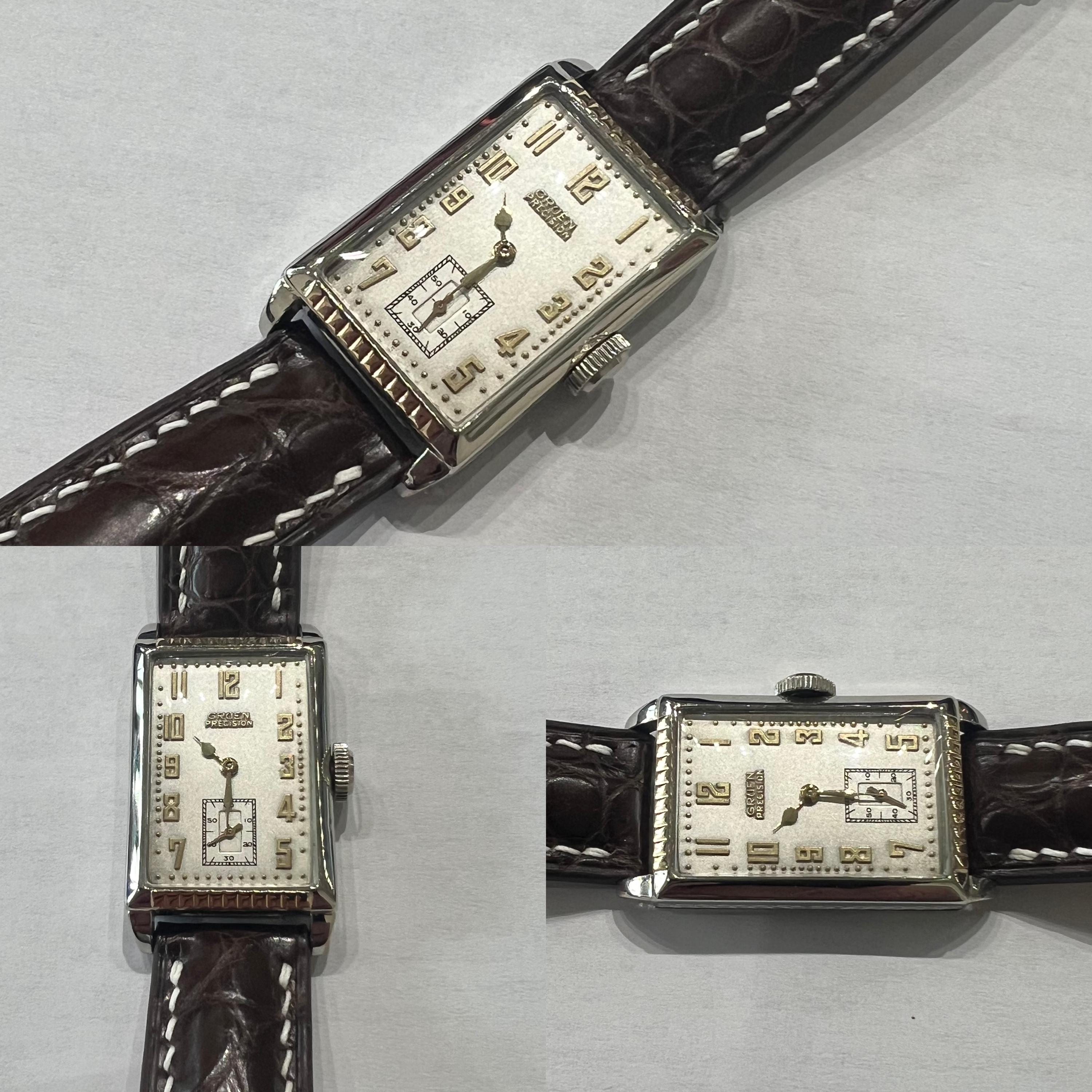
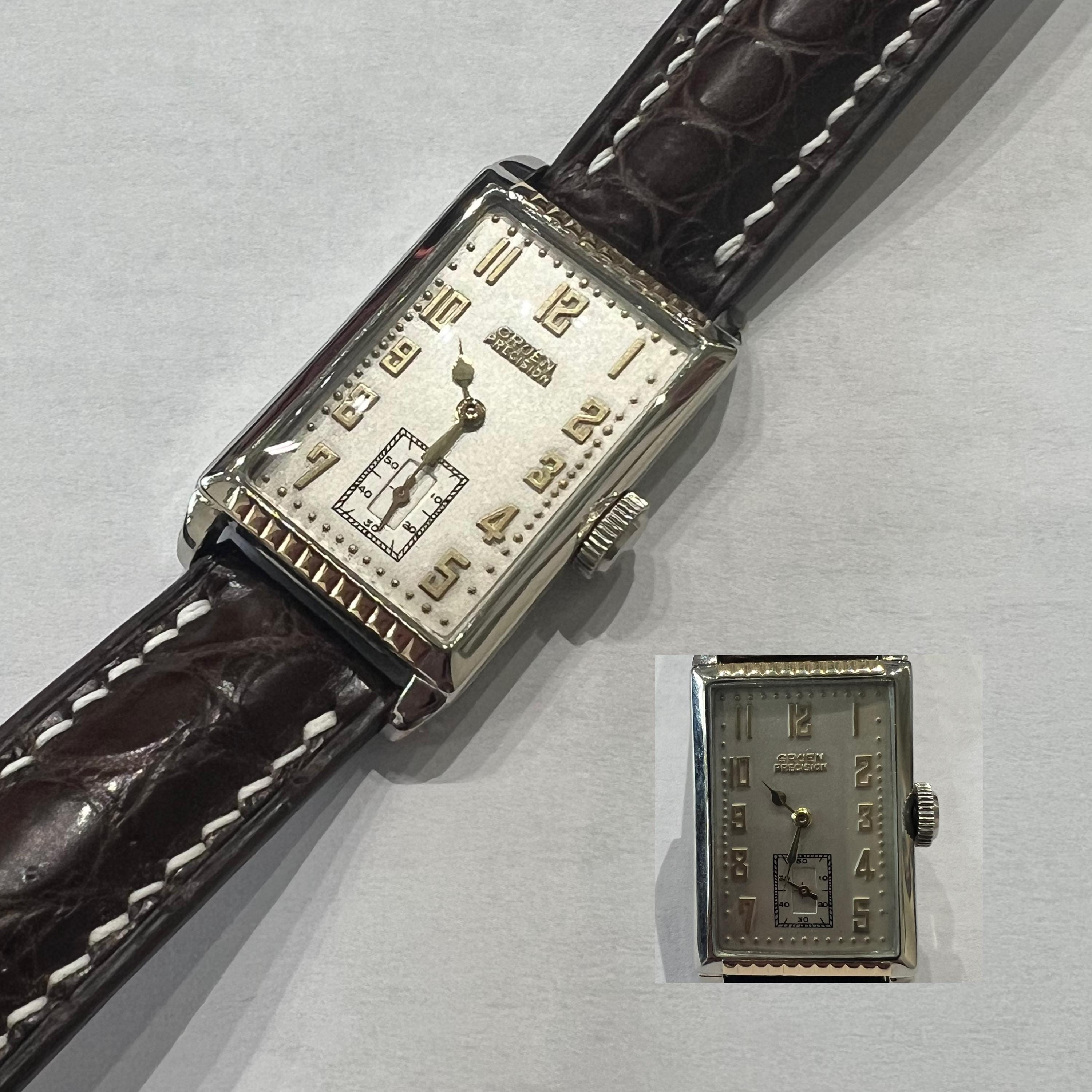
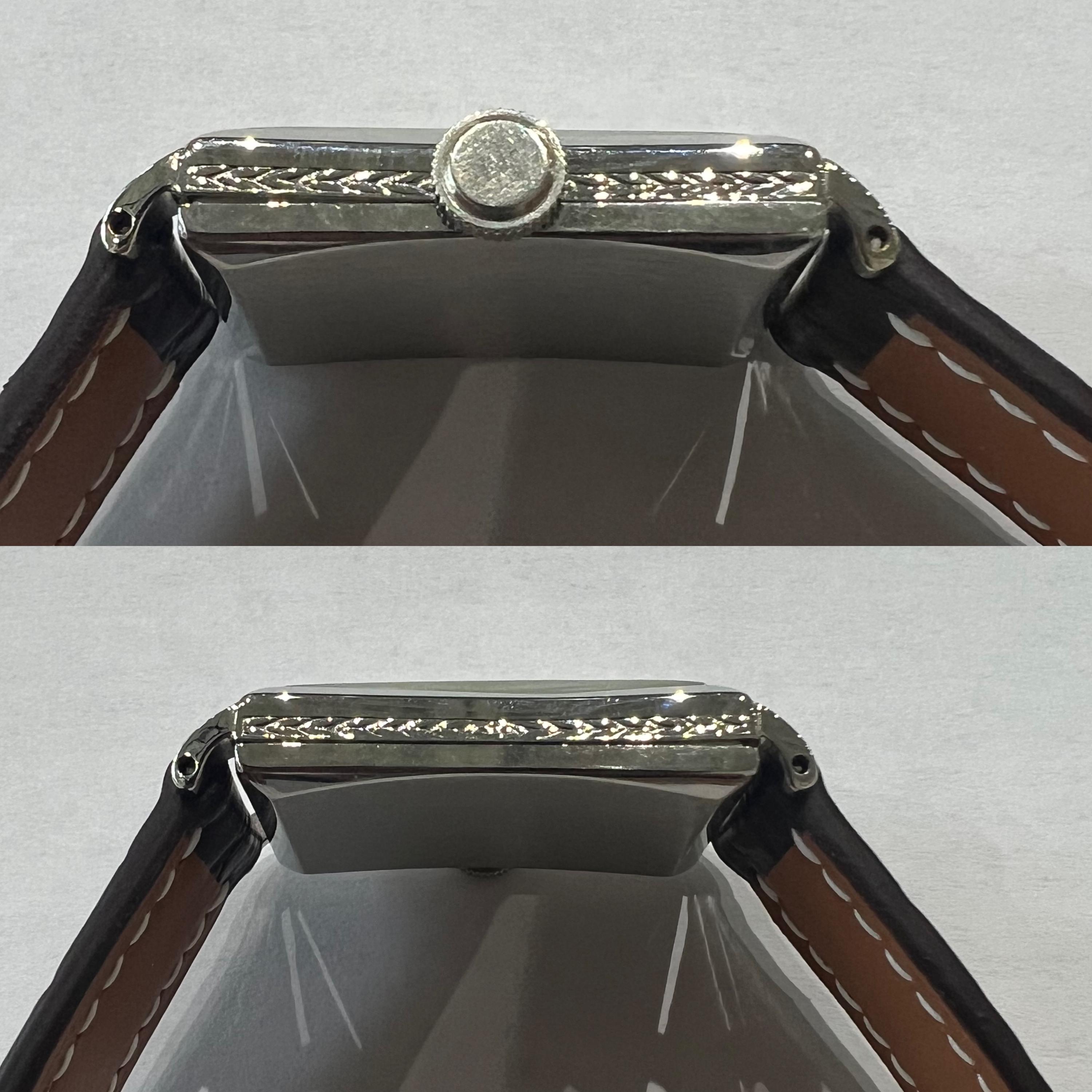
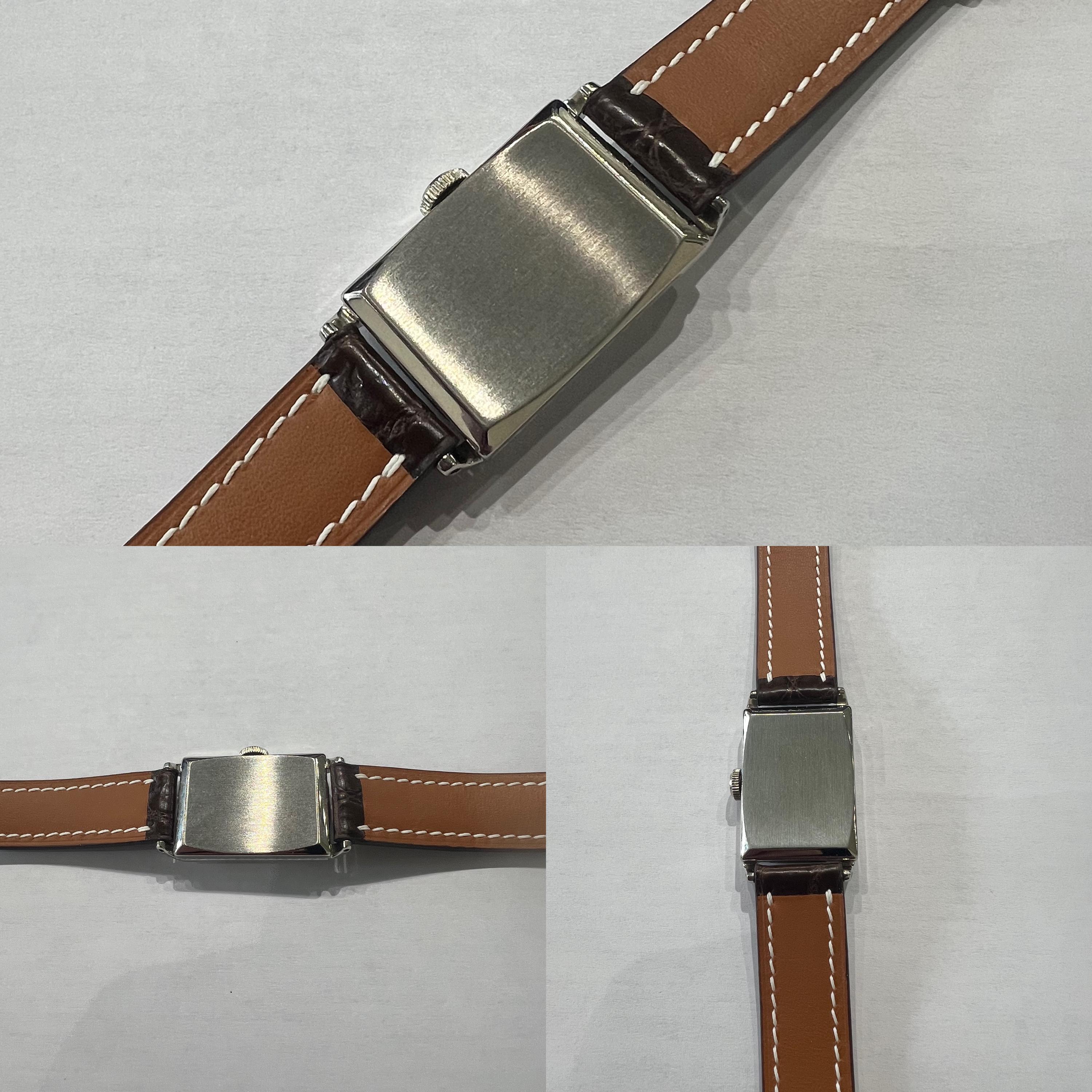
What I have is a Gruen Caliber 117 that is in stunning condition. Far too often 100 years old Gold-Filled watches weather poorly through the years. This is an exception, this case reflects tender loving care, someone who cherished the watch knowing it would be passed down to multiple generations
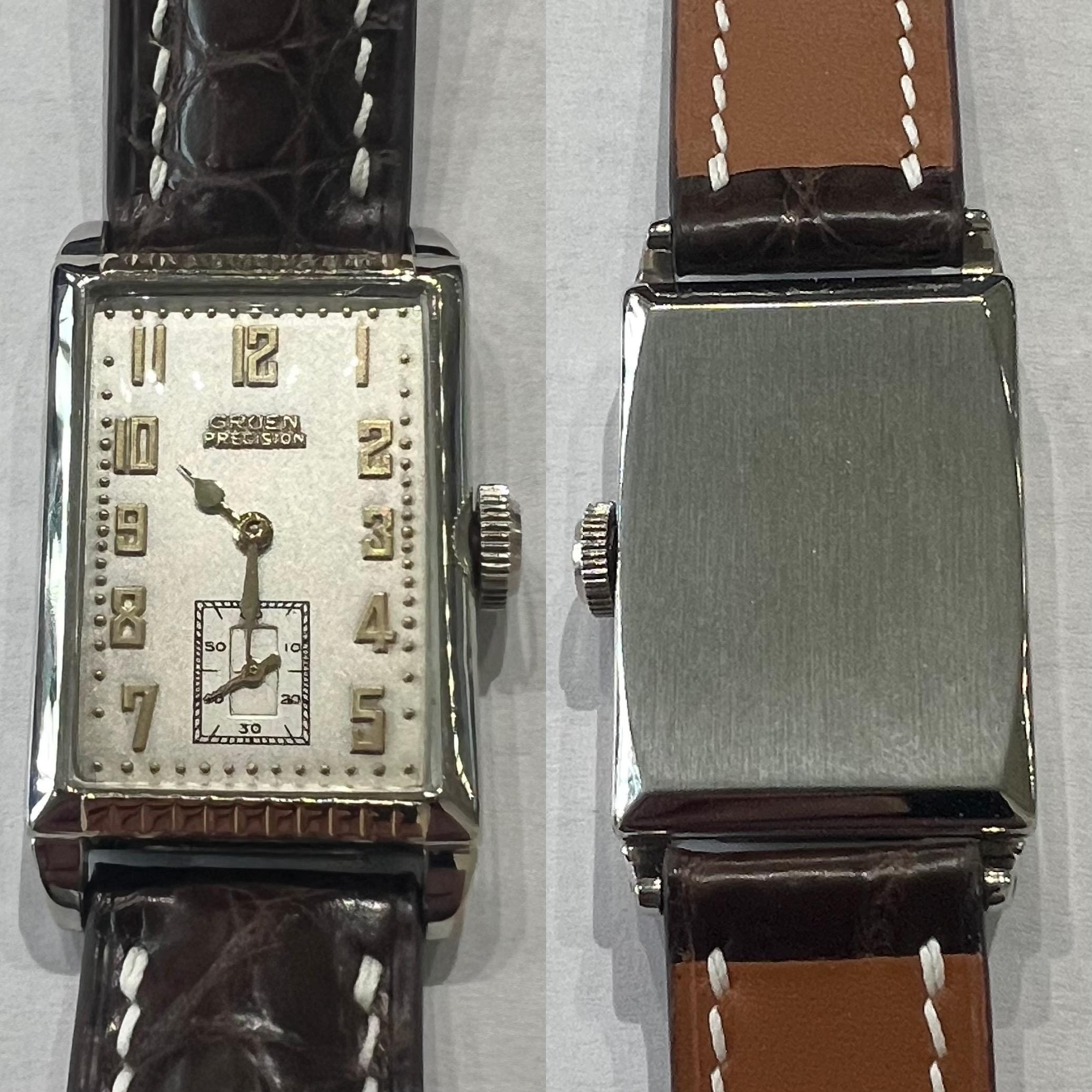
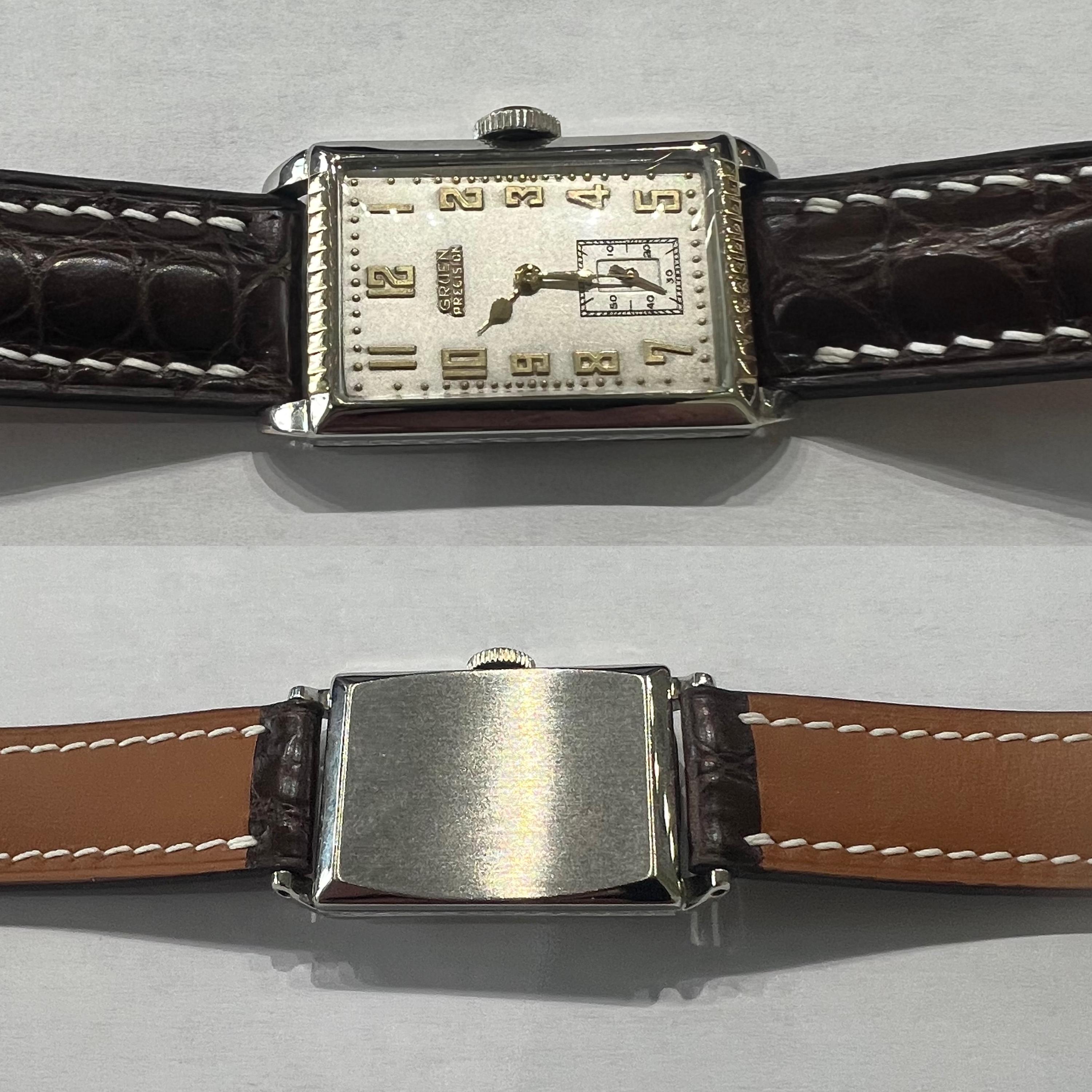
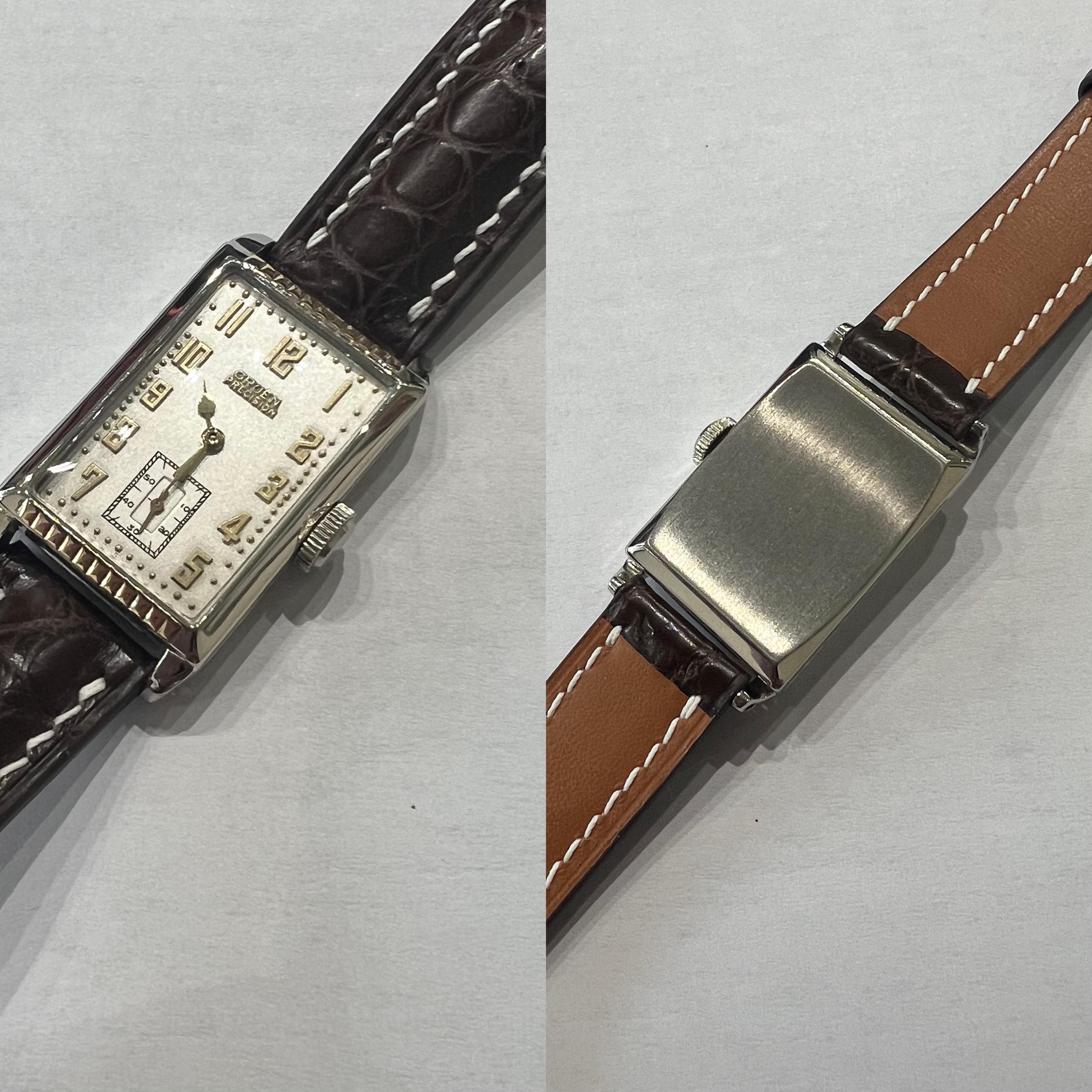
The case is fabulous
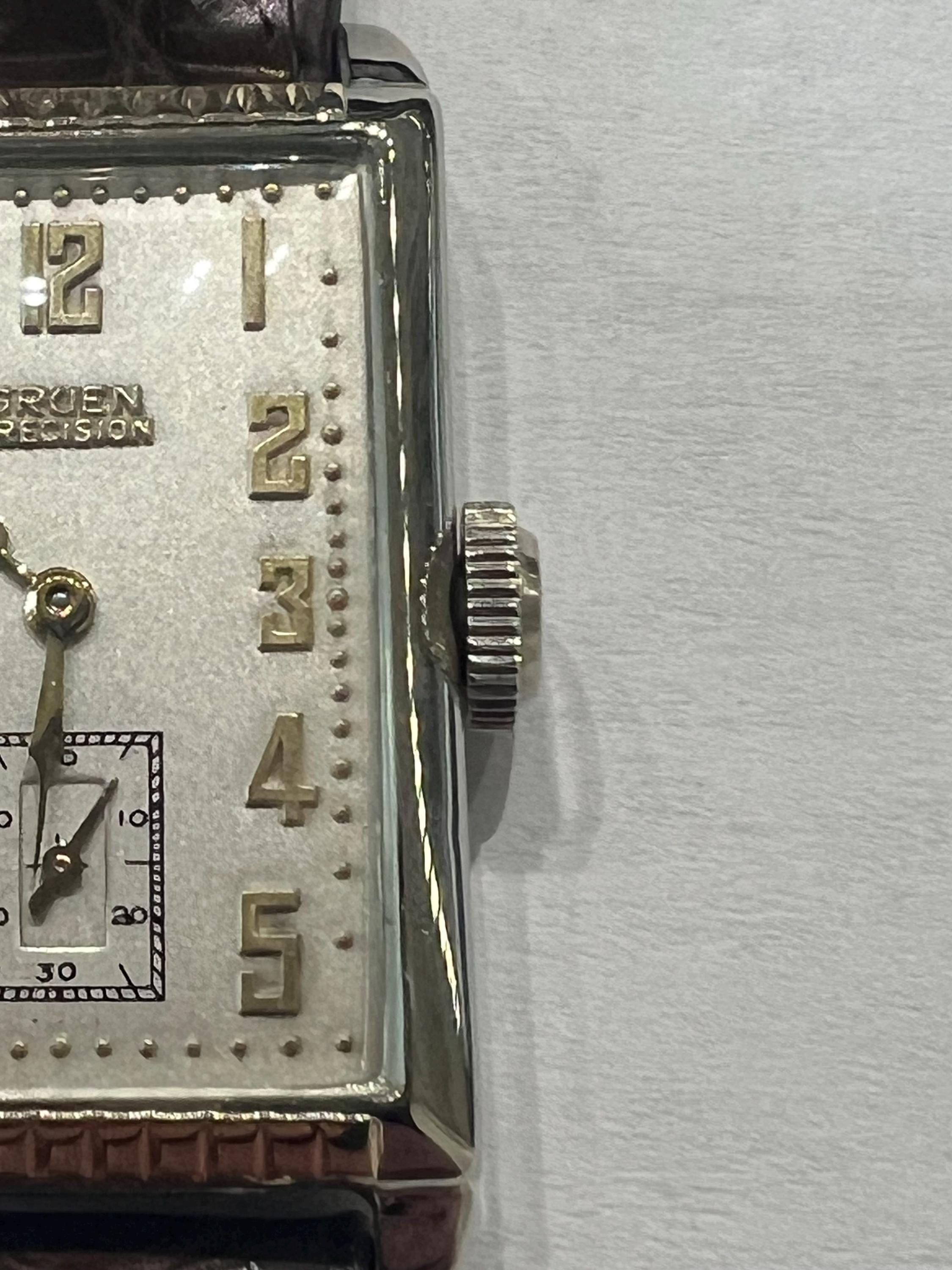
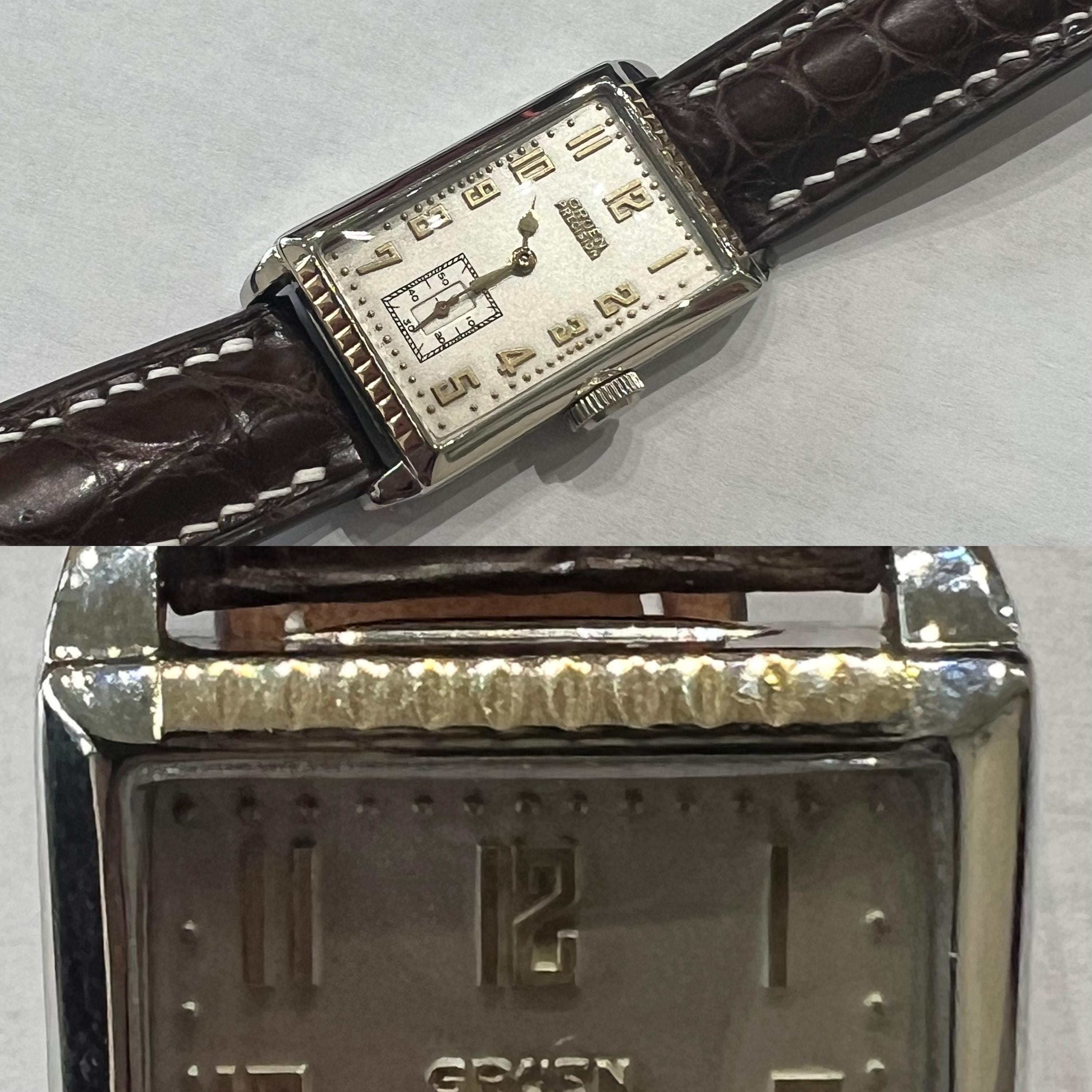
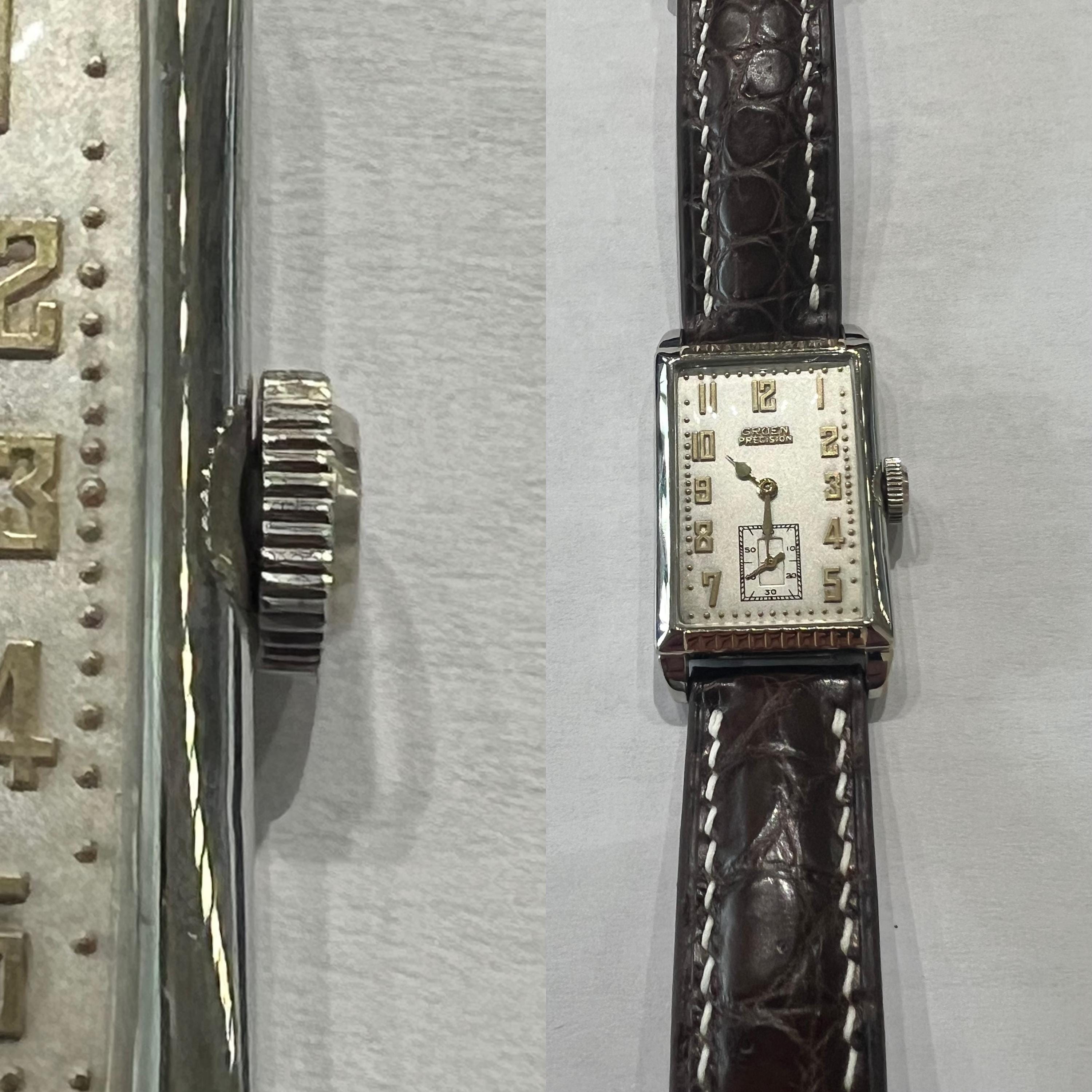
The dial has been professionally restored to bring back its original glory. A little more about the public look. The dial is truly sublime. Its surface has the quality of liquid satin—soft, luminous, and effortlessly refined. Raised gold numerals float above the dial, a subtle yet decisive detail that gives the composition depth and quiet distinction. The hands, finished in high-polished yellow gold, catch the light with restraint rather than excess.
At the north and south of the case, ribbed gold inlays provide a discreet architectural accent, framing the dial with purpose and balance. Every element feels considered, each detail in conversation with the next. The result is a design of seamless harmony—elegant, assured, and timeless in its restraint.
The movement has had a comprehensive mechanical service
A NOS crystal has been fitted
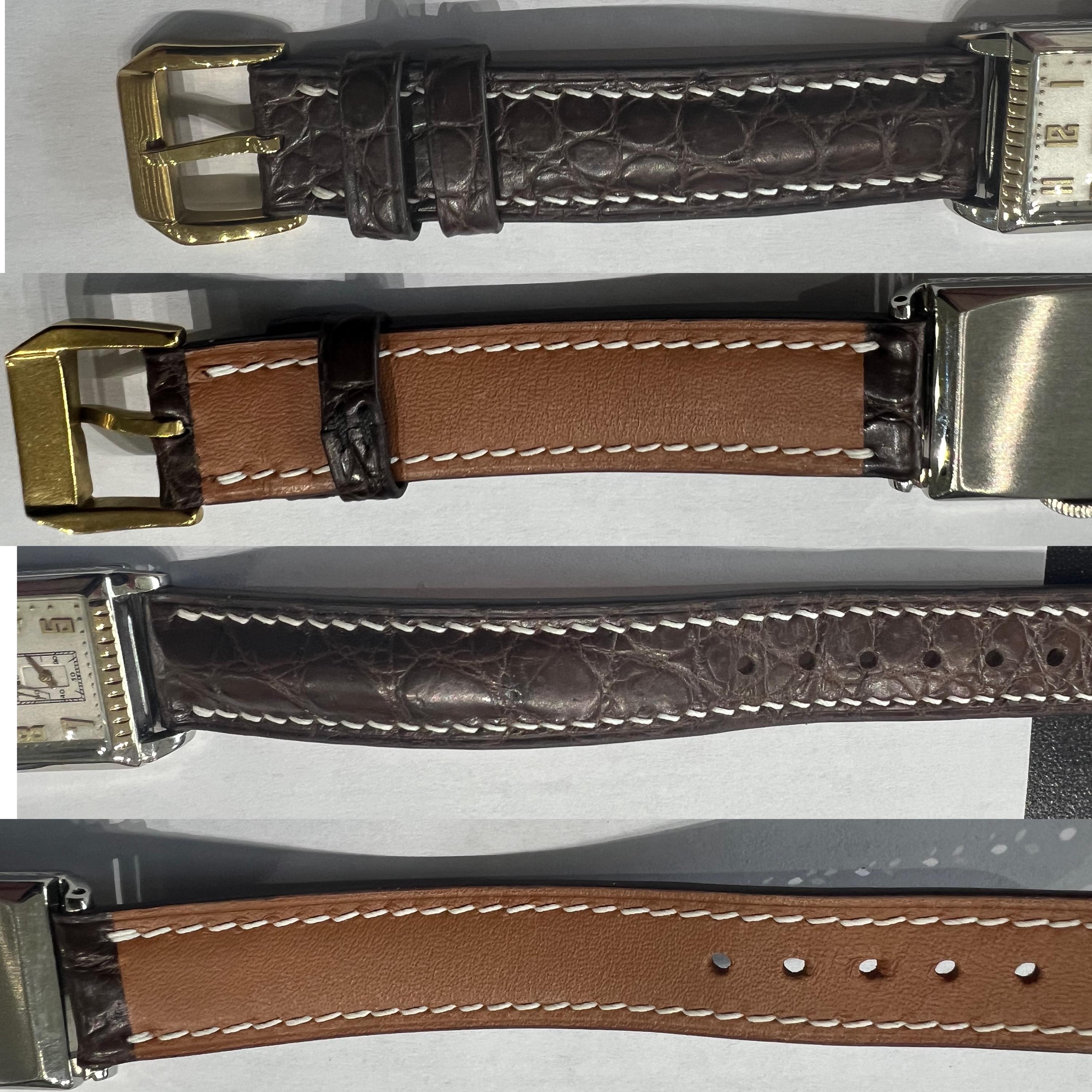
I hand selected a brown Alligator band with white top stitching to replicatele2gante yesteryear
This watch has the original hands (refinished) , original crown, original dial (refinished)
If you are looking for an extraordinary Art Deco offering, look no further. This watch is divine. You will not find another this well preserved.
The Gruen Quadron: When Shape Became Substance
Among vintage American wristwatches, few lines represent such a decisive break from convention as the Gruen Quadron. To collectors who study movements as closely as cases, the Quadron is not merely an Art Deco design exercise — it is one of the earliest moments when wristwatch engineering caught up with wristwatch ambition.
Introduced in 1925, the Quadron was Gruen’s answer to a fundamental problem of early wristwatches: most were still compromised by round movements forced into non-round cases, leaving wasted space, inefficient gear trains, and inconsistent performance. Gruen rejected that compromise entirely. The Quadron was engineered from the inside out, with movements designed expressly for rectangular and tonneau cases, allowing longer mainsprings, better torque distribution, and improved chronometric stability.
From a collector’s standpoint, this is the moment the wristwatch stopped being a novelty and started demanding respect.
Achievements and Milestones
1925 — A Purpose-Built Wristwatch Movement
The Quadron’s debut marked one of the earliest large-scale commitments to form-fitting wristwatch movements. Unlike many contemporaries, Gruen did not simply adapt pocket-watch architecture. The Quadron calibers were compact, rectangular, and optimized for their cases — a move that placed Gruen well ahead of most American competitors.
Chronometric Ambition
Gruen famously subjected Quadron movements to observatory-style testing, conducted to standards originally intended for pocket watches. Period records indicate that large batches of Quadron movements passed these trials, reinforcing Gruen’s claim that wristwatches could meet serious accuracy expectations. For collectors today, this is not marketing fluff — it is early proof of wristwatch legitimacy.
Art Deco, Authentically
The Quadron’s stepped cases, elongated proportions, and architectural symmetry place it firmly in the Art Deco canon, but unlike many design-forward watches of the era, its mechanics were equally modern. That harmony of design and engineering is precisely why Quadrons still feel “right” on the wrist nearly a century later.
Understanding the Movements: A Collector’s Breakdown
The Quadron story is best told through its calibers. Each represents a chapter in Gruen’s evolving philosophy, not a hierarchy of good versus bad.
Caliber 117 — The Statement Piece
Introduced: 1925
Jewels: 17
Role: The flagship Quadron movement
The 117 is the movement most often cited when discussing Gruen’s chronometric ambitions. Fully jeweled and carefully adjusted, it embodied what Gruen wanted the Quadron to represent: precision, modernity, and credibility. Collectors prize it not just for performance, but because it represents the purest expression of the original Quadron idea.
Caliber 157 — The Original Workhorse (Corrected Date)
Introduced: circa 1925
Jewels: Approximately 15
Role: Standard-grade Quadron movement, introduced at launch
This point deserves clarity: the Caliber 157 was introduced at the very beginning of the Quadron line, not years later. Gruen’s own movement catalogs and production tables place the 157 squarely in 1925, offered alongside higher-grade movements like the 117.
Gruen’s strategy was deliberate. From the outset, the company provided multiple grades of the same movement architecture:
The 117 served customers seeking maximum refinement.
The 157 delivered the same purpose-built rectangular engineering in a slightly simplified, more accessible form.
From a collector’s perspective, the 157 is not a lesser movement — it is an original pillar of the Quadron program. Its widespread survival today speaks to its robustness and practical design.
Calibers 119 and 123 — Refinement Through Iteration
Introduced: Late 1920s
Jewels: Typically 17
Role: Incremental improvements
These calibers represent Gruen doing what good manufacturers do: refining what already works. Changes were evolutionary rather than revolutionary — adjustments to train layout, barrel execution, and production efficiency. To collectors, these movements signal maturity, not experimentation.
Caliber 325 (and 3251) — Later Sophistication
Jewels: 17 (325), 21 (3251)
Role: Advanced continuation of rectangular design
The 325 series reflects Gruen’s sustained commitment to shaped movements well into the 1930s. The 21-jewel 3251 in particular attracts collectors who appreciate subtle mechanical upgrades without abandoning classic Quadron proportions. These movements bridge the Quadron philosophy with the refinement that would later culminate in the Curvex era.
Why the Quadron Still Matters
To collect Quadrons is to collect intent. Every decision — from movement geometry to case proportions — reflects a company willing to rethink convention at a time when the wristwatch itself was still proving its worth.
The Quadron also foreshadows what came next. Gruen’s later triumphs, especially the Curvex, do not appear suddenly or accidentally. They grow naturally from the lessons learned in the Quadron: respect the wrist, respect the movement, and let engineering serve design rather than fight it.
A Collector’s Closing Thought
The Quadron endures not because it is rare, nor because it is flashy, but because it is honest. Honest in design. Honest in engineering. Honest in purpose.
“The Quadron reminds us that true innovation doesn’t shout — it fits perfectly, runs quietly, and lets time speak for itself.” -
Shipping & Policies
Shipping from United States
Processing time
3-5 business days
Customs and import taxes
Buyers are responsible for any customs and import taxes that may apply. I'm not responsible for delays due to customs.
Payment Options
Returns & Exchanges
I gladly accept returns, exchanges, and cancellations
Just contact me within: 14 days of delivery
Ship items back to me within: 30 days of delivery
- Custom or personalized orders
- Perishable products (like food or flowers)
- Digital downloads
- Intimate items (for health/hygiene reasons)
- Items on sale
Conditions of return
Buyers are responsible for return shipping costs. If the item is not returned in its original condition, the buyer is responsible for any loss in value.
Questions about your order?
Please contact me if you have any problems with your order.
Frequently Asked Questions
Custom and personalized orders
I will review your requests and evaluate it for completion
Related Products